Tel:+86 0311 8444 9786
E-mail:export@double-bulls.com
WhatsApp:+86 173 3117 7788
Add.:No.9 Weisi Road, Jinzhou City
economic development zone,
Shijiazhuang City,Hebei Province.
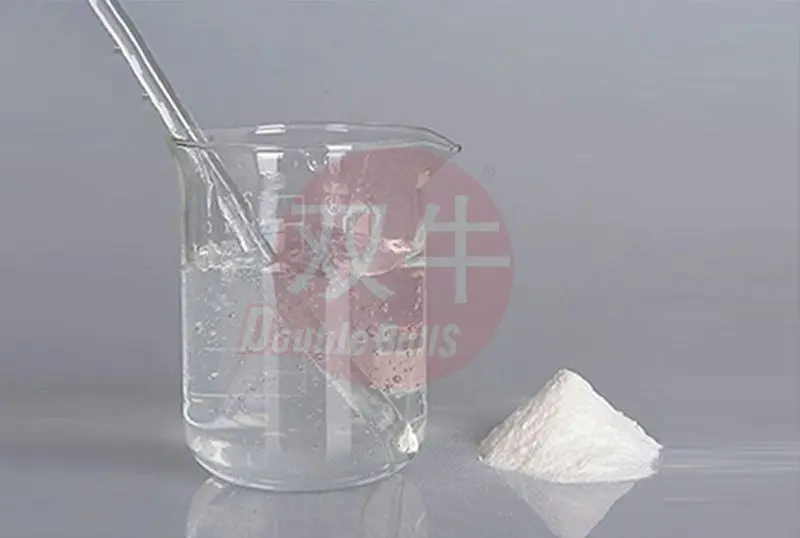
cellulose etherAs a pharmaceutical excipient used as an adhesive in tablet production, the core principle is to rely on its own water solubility/dispersibility, entanglement ability of polymer chains, and adsorption with drug powder particles to bond loose powder into particles with certain strength and hardness, and then press them into qualified tablets. The specific mechanism and process can be divided into the following stages:
Dissolution/swelling stage: formation of viscous system
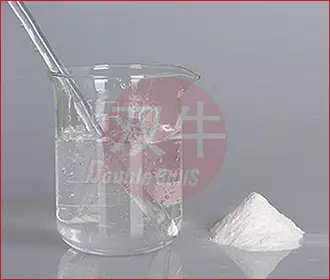
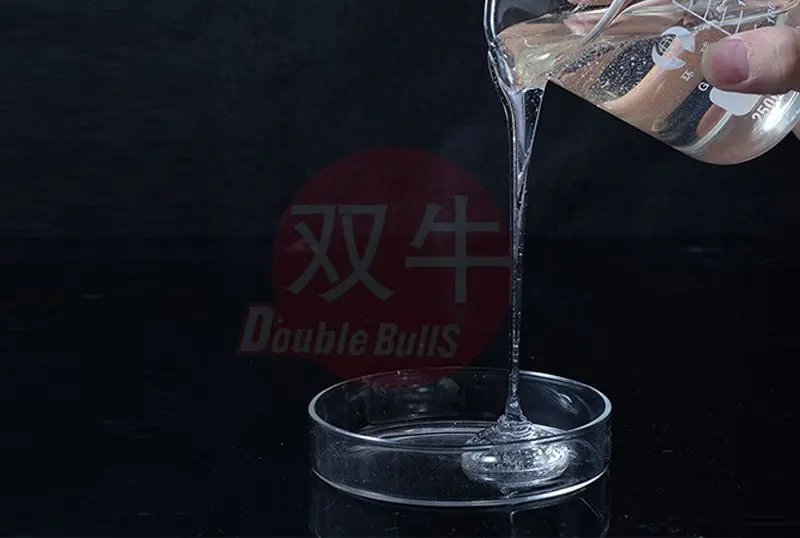
Cellulose ether adhesives (such as hydroxypropyl methylcellulose HPMC, hydroxypropyl cellulose HPC, methyl cellulose MC, etc.) contain a large number of hydrophilic hydroxyl and ether bonds in their molecular structure. When they come into contact with water or ethanol water mixed solutions, they quickly absorb water and swell (such as methyl cellulose) or completely dissolve (such as hydroxypropyl methylcellulose), forming a uniform viscous colloidal solution. The viscosity of this colloidal solution is the basis for its adhesive effect - the higher the viscosity, the stronger the entanglement between molecular chains, and the stronger the adhesive ability. Different viscosity specifications of cellulose ether can be selected according to the tablet hardness requirements.
Wetting and spreading stage: wrapping drug particles
During the granulation process (whether it is the adhesive spraying stage of wet granulation or dry granulation),cellulose etherThe viscous solution will be evenly sprayed or mixed into the drug powder, wetting the surface of the drug particles with the surface tension of the liquid. At this point, the viscous solution will spread out on the surface of the particles, forming a thin layer of viscous film, giving the originally loose particle surface adhesive properties. In this process, the wetting ability of the solution is crucial, and the etherification modification of cellulose ether can precisely adjust its hydrophilic and oleophilic balance, adapting to different properties of drug powders (including hydrophobic drugs).
Particle aggregation and forming stage: forming stable particles
When the wet drug particles are subjected to stirring and shearing in the granulator, adjacent particles will collide and approach each other, and the viscous film on the surface of the particles will adhere. The polymer chains will form a "bridging" structure between the particles. As the water gradually evaporates, the polymer chains of cellulose ether will solidify, forming a strong adhesive bridge that binds multiple drug particles together, forming uniformly sized and moderately strong wet particles. These wet particles have good flowability and compressibility after being dried and whole.
Tablet pressing and tablet forming stage: ensuring tablet hardness and disintegration balance
During the tablet pressing process, the dried particles are subjected to the pressure of the mold, compressing the gaps between the particles. The adhesive bridge formed by cellulose ether further adheres tightly, giving the tablets sufficient hardness and wear resistance, avoiding problems such as cracking and loosening during transportation and storage. At the same time, the water solubility or water dispersibility of cellulose ether can also balance the disintegration performance of the tablet - when the tablet enters the body, cellulose ether absorbs water and swells, breaking the adhesive bridge between particles, promoting rapid disintegration of the tablet, and releasing the drug to exert its efficacy.
different typescellulose etherThere are slight differences in adhesive properties, for example, hydroxypropyl methylcellulose (HPMC) has better adhesion and disintegration balance, which is suitable for most tablets; Hydroxypropyl cellulose (HPC) is soluble in water and ethanol, making it suitable for granulation of water sensitive drugs; Methyl cellulose (MC) has strong viscosity and is suitable for scenarios that require high hardness tablets.

TEL:+86 (0311) 8444 9786
Email:sales@double-bulls.com
Email:Export@double-bulls.com
Address:No.9 Weisi Road, Jinzhou City Eco-nomic Development Zone, Shijiazhuang City, Hebei Province.

Website

Brochure

Video