Tel:+86 0311 8444 9786
E-mail:export@double-bulls.com
WhatsApp:+86 173 3117 7788
Add.:No.9 Weisi Road, Jinzhou City
economic development zone,
Shijiazhuang City,Hebei Province.
Suspension drugs are one of the commonly used types of formulations in clinical practice, formed by dispersing insoluble drug particles in a liquid dispersion medium. Due to the density of the drug particles, they are prone to settling after standing, which affects the uniformity and efficacy of the formulation.celluloseAs a natural polymer compound, it has become one of the widely used suspension aids in suspension drugs due to its unique structural characteristics and excellent physicochemical properties. It can effectively delay the sedimentation of drug particles and improve the stability of the formulation. This article combines the principles of pharmacy and clinical application practice to analyze in detail the suspension mechanism, common types, and application points of cellulose in suspension drugs, providing reference for formulation research and production.
1、 The pain points of sedimentation of suspension type drugs and the core role of suspension aids
In suspension type drugs, the particle size of insoluble drug particles is usually between 0.1-100 μ m, and their density is mostly higher than that of the dispersion medium (mostly water). According to Stokes' law, the settling velocity of particles is proportional to the square of the particle radius and the density difference between particles and the medium, and inversely proportional to the viscosity of the medium. If no suspension aid is added, the drug particles will quickly settle, causing the formulation to layer. The upper layer is a clear dispersion medium, and the lower layer is a dense drug precipitate. When used, it needs to be shaken repeatedly, which not only affects the convenience of medication, but also may lead to inaccurate dosage due to uneven particle distribution, thereby affecting the treatment effect and even causing medication safety hazards.
The core function of a suspension aid is to regulate the physicochemical properties of the dispersing medium, delay the settling of drug particles, and maintain the uniformity and stability of the suspension. The ideal suspension agent should have the characteristics of no physiological toxicity, good compatibility with drugs and dispersion media, significant increase in medium viscosity, and not easily degraded by microorganisms. Cellulose materials precisely meet these requirements and become indispensable key excipients in suspension drugs.
2、 The mechanism of cellulose's suspending effect in suspended pharmaceuticals
The core reason why cellulose can effectively prevent drug particle sedimentation is through the synergistic action of "increasing medium viscosity, adsorbing particles to form a protective barrier, and adjusting Zeta potential" to improve the stability of the suspension from a physical perspective. The specific mechanism is as follows:
(1) Increase the viscosity of the dispersing medium and reduce the settling velocity of particles
Cellulose is a type of polymer with a large number of hydroxyl groups in its molecular structure. It can undergo hydration in water, forming a viscous colloidal solution that significantly increases the viscosity of the dispersion medium. According to Stokes' law, the higher the viscosity of the dispersing medium, the slower the settling speed of drug particles. Cellulose molecules entangle with each other in water, forming a network structure that supports the dispersing medium like a "skeleton", hindering the free movement of drug particles and thus delaying the settling process. For example, carboxymethyl cellulose sodium (CMC Na) can form a high viscosity colloid after dissolving in water, increasing the viscosity of the dispersion medium several times, reducing the settling speed of drug particles to an acceptable range, and ensuring that the suspension remains in a uniform state within its effective period.
(2) Adsorb drug particles to form a three-dimensional protective barrier
Cellulose molecules have a large number of hydrophilic groups on their surface, which can adsorb onto the surface of drug particles and form a uniform cellulose protective film on the particle surface. This protective film can not only reduce the chance of collision between drug particles and prevent particles from getting larger due to collision aggregation (the settling speed of aggregated particles will significantly increase), but also prevent direct contact between particles and dispersion media, reduce particle dissolution and leaching, and further maintain the dispersion state of particles. Meanwhile, cellulose protective film has certain elasticity and toughness, which can buffer the influence of external factors (such as vibration and temperature changes) on particles and improve the stability of the suspension.
(3) Adjust the Zeta potential of particles to enhance electrostatic repulsion
The Zeta potential of drug particles in a suspension is an important factor affecting particle stability. When particles have the same surface charge, electrostatic repulsion is generated to prevent particle aggregation. After cellulose based suspension aids dissociate in water, they will carry a certain charge (such as sodium carboxymethyl cellulose carrying a negative charge), which will adsorb on the surface of drug particles, forming a stable double layer on the particle surface, regulating the Zeta potential of particles, and expanding the electrostatic repulsion between particles. When the electrostatic repulsion is greater than the van der Waals attraction between particles, drug particles can maintain a uniform dispersion state and are less likely to aggregate and settle.
(4) Improve particle wettability and enhance dispersion uniformity
Some insoluble drug particles have hydrophobicity and are not easily wetted in water. They are prone to float on the surface of the medium or aggregate into clusters, which affects the suspension effect. Cellulose based suspension aids have good hydrophilicity, which can reduce the surface tension of the dispersion medium, improve the wettability of drug particles, enable water to smoothly penetrate the particle surface, and evenly disperse the particles in the medium, further reducing the occurrence of sedimentation.
3、 Commonly used in suspended pharmaceuticalscelluloseSuspension aid and its application characteristics
In the production of suspension type drugs, different types of cellulose have different suspension effects and applicable scenarios due to structural differences. The commonly used cellulose suspension aids mainly include the following, each with a focus on adapting to different formulation requirements:
(1) Carboxymethyl cellulose sodium (CMC Na)
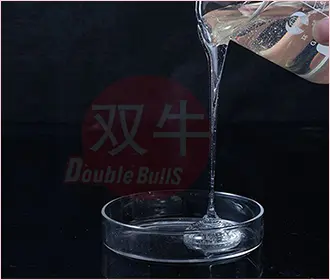
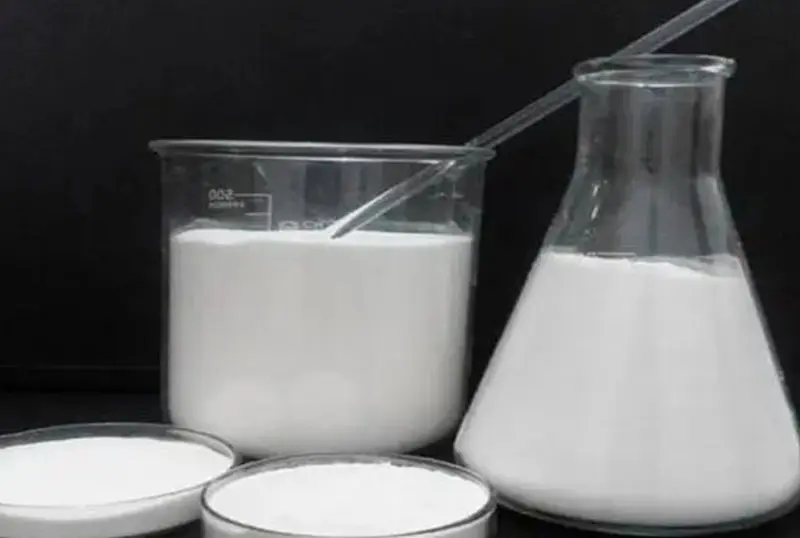
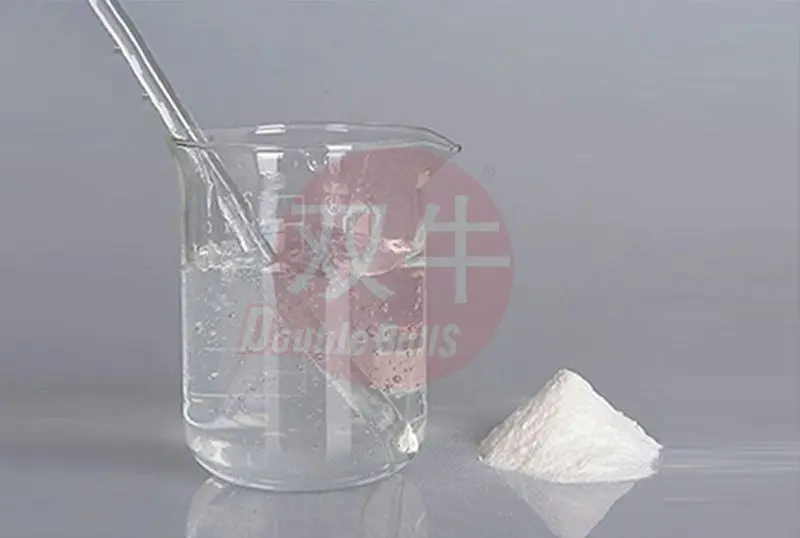
Carboxymethyl cellulose sodium is a widely used cellulose suspension aid in current suspension agents. It is a white powder that is easily soluble in water and forms a transparent and viscous colloidal solution after dissolution. Its advantages are significant suspension effect, ability to adjust the viscosity of the medium within a wide concentration range, good compatibility with most drugs and excipients, no obvious physiological toxicity, suitable for various suspension preparations such as oral and external use, such as calamine detergent, oral suspension, etc. Attention should be paid to controlling the concentration during use. Excessive concentration can cause the preparation to become too viscous, affecting pouring and administration; If the concentration is too low, the suspension effect will be poor.
(2) Hydroxypropyl methylcellulose (HPMC)
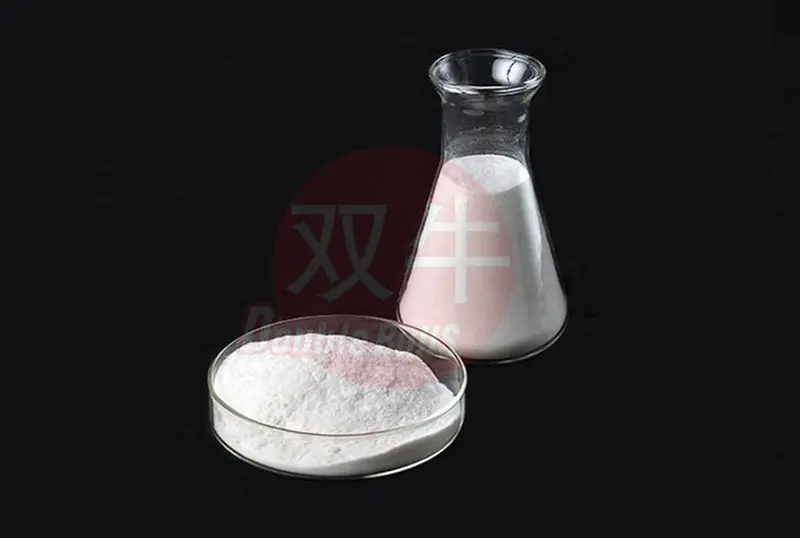
Hydroxypropyl methyl cellulose is a white or off white powder that can quickly swell in cold water to form a viscous solution, while its dissolution rate is slower in hot water. Its characteristics are good viscosity stability, less affected by temperature changes, and good film-forming and thickening properties. It can not only help suspend, but also improve the taste and stability of the formulation. Commonly used in oral suspensions, ophthalmic suspensions, and other formulations, especially suitable for formulations that require high stability, such as antibiotic oral suspensions.
(3) Methyl cellulose (MC)
Methyl cellulose is a white powder that is insoluble in hot water. It swells in cold water to form a viscous colloid, and its viscosity is greatly affected by temperature. When the temperature increases, the viscosity will significantly decrease. Its suspension effect is mild and suitable for suspension preparations with lower concentrations, or used in combination with other suspension agents to enhance the suspension effect. Commonly used for external suspension detergents, such as suspension ointments for skin application.
(4) Hydroxyethyl cellulose (HEC)
Hydroxyethyl cellulose is a white powder that is easily soluble in water, forming a transparent viscous solution after dissolution. It has good viscosity stability, strong salt resistance, and is not easily affected by electrolytes in the solution. Suitable for suspension formulations containing electrolytes, such as oral suspensions containing salt excipients, which can effectively maintain the stability of the formulation and avoid a decrease in suspension effect due to the presence of electrolytes.
4、 Precautions for the application of cellulose suspension aids
In order to fully utilize the suspending effect of cellulose and ensure the stability and safety of suspension drugs, the following points should be noted in the development and production process of formulations:
(1) Control the concentration of use, balance the suspension effect with the convenience of administration
The suspension effect of cellulose is positively correlated with concentration, but excessive concentration can cause the viscosity of the formulation to be too high, affecting pouring, stirring, and administration, especially for oral suspensions that can affect patient swallowing; If the concentration is too low, the ideal suspension effect cannot be achieved, and the drug particles will still settle rapidly. Therefore, the concentration of cellulose used should be reasonably determined based on the size, density, and intended use of the drug particles, with a typical dosage of 0.5% -5% (mass to volume ratio).
(2) Ensure sufficient dissolution and avoid clumping phenomenon
If cellulose based suspension aids are not fully dissolved, they will form clumps, which not only fail to exert their suspension effect, but also affect the uniformity and appearance of the formulation. When using, cellulose powder can be mixed evenly with a small amount of dispersing medium (such as glycerol, ethanol) to make a paste. Then, slowly add an appropriate amount of water and stir until completely dissolved to avoid clumping caused by directly adding the powder to water.
(3) Pay attention to compatibility and avoid interactions
Cellulose based suspension aids may interact with some drugs or excipients, affecting the suspension effect or formulation stability. For example, certain cationic drugs may bind to negatively charged carboxymethyl cellulose sodium, causing cellulose precipitation and losing its suspension effect. Therefore, in the formulation development stage, compatibility tests need to be conducted to ensure good compatibility between cellulose and drugs and excipients.
(4) Control the pH value of the formulation to maintain the stability of the suspension
The viscosity and stability of cellulose are greatly affected by pH value. For example, sodium carboxymethyl cellulose has better stability in neutral or weakly alkaline environments, but may degrade in acidic environments, leading to a decrease in viscosity and weakened suspension effect. Therefore, it is necessary to adjust the pH value of the suspension formulation reasonably according to the type of cellulose, to ensure its stable suspension effect within the validity period.
(5) Pay attention to storage conditions to prevent the preparation from deteriorating
Cellulose based suspension aids are easily degraded by microorganisms, leading to a decrease in viscosity, turbidity, or precipitation of the formulation. Therefore, suspension formulations need to be added with appropriate preservatives such as benzalkonium bromide, nipagin esters, etc., and stored in a cool, dry, and ventilated place to avoid high temperature and humid environments, prevent microbial growth, and ensure the stability and safety of the formulation.
5、 Summary and Prospect
celluloseAs a natural polymer suspension aid, it occupies an important position in suspension drugs due to its advantages of safety, non toxicity, significant suspension effect, wide sources, and low cost. By increasing the viscosity of the dispersion medium, adsorbing drug particles, and adjusting Zeta potential, it effectively solves the pain points of drug particle sedimentation, improves the stability and medication safety of the formulation. With the continuous development of pharmaceutical technology, modified cellulose based suspension aids (such as cross-linked carboxymethyl cellulose sodium, hydroxypropyl cellulose ether, etc.) continue to emerge, and their suspension effects and stability are further improved to meet the needs of more complex formulations.
In the future, with the continuous deepening of research on the structure and suspension mechanism of cellulose, the modification process of cellulose will be further optimized to develop more stable and suitable suspension products for clinical needs, promote the development of suspension drugs in a more convenient direction, and provide more reliable formulation guarantees for clinical treatment.

TEL:+86 (0311) 8444 9786
Email:sales@double-bulls.com
Email:Export@double-bulls.com
Address:No.9 Weisi Road, Jinzhou City Eco-nomic Development Zone, Shijiazhuang City, Hebei Province.

Website

Brochure

Video